What to Eat After Wisdom Teeth Removal
Choosing the right foods after wisdom teeth removal can make recovery more comfortable and help protect the surgical sites. During the first days, your mouth may feel sore, swollen, or stiff, so foods that are soft and easy to swallow are usually the most manageable.
There is no single schedule that fits every patient. Your oral surgeon’s instructions should always come first, particularly if your extraction was complex or you have other health considerations.
What to Eat During the First 24 Hours
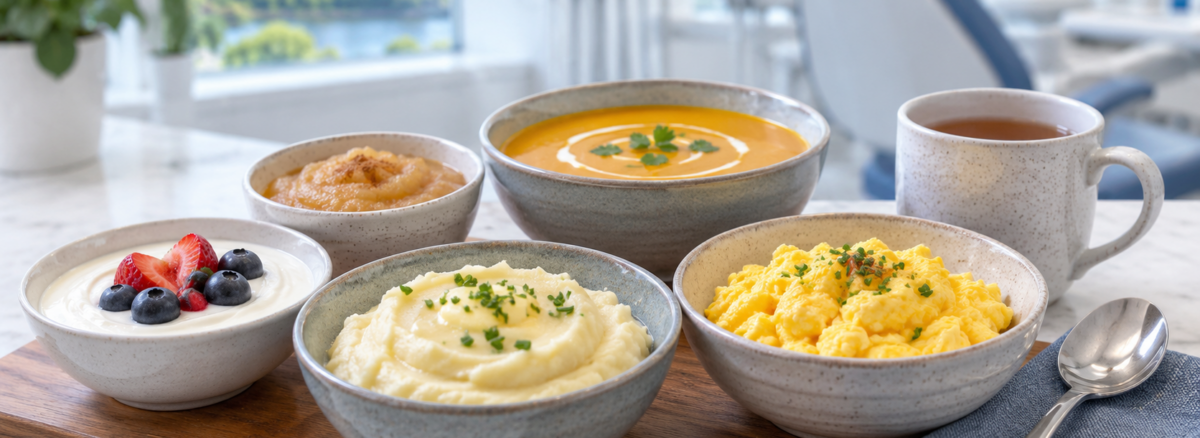
Begin with cool or lukewarm foods that require little or no chewing. Examples may include smooth yogurt, applesauce, pudding, gelatin, blended soup that is not hot, or a smoothie eaten with a spoon.
Drink fluids as directed, but do not use a straw. The suction created by a straw may disturb the blood clot that protects the extraction socket. Take small sips from a cup instead.
Choose Smooth, Mild Foods
Foods should be soft, moist, and free from small particles that could become trapped around the surgical sites. Avoid very hot temperatures while your mouth is numb because you may burn yourself without realizing it.
Foods for the Next Few Days
As your comfort improves, you may add foods such as mashed potatoes, scrambled eggs, oatmeal, cottage cheese, soft pasta, well-cooked vegetables, soft fish, avocado, or finely mashed fruit. Chew away from the extraction areas when possible.
Continue to listen to your body. If a food causes pain, requires forceful chewing, or leaves pieces around the socket, return to softer options and try again later.
Getting Enough Protein and Energy
Eating may feel inconvenient, but your body still needs nutrition during recovery. Soft eggs, yogurt, cottage cheese, blended legumes, and tender fish can provide protein. Choose foods that fit your dietary needs and any medical advice you have received.
Be Careful With Smoothies
Smoothies can be convenient, but avoid seeds and drink them from a cup or use a spoon. Do not use a straw. Also avoid very thick mixtures that require strong suction.
Foods to Avoid After Wisdom Teeth Removal
Hard, crunchy, sticky, spicy, or very hot foods can irritate the surgical sites. Nuts, popcorn, chips, seeds, granola, tough meat, and crusty bread may be uncomfortable or leave particles near the sockets.
Alcohol should be avoided according to your surgeon’s directions and may interact with prescribed medication. Smoking and vaping can also interfere with healing and increase the risk of complications.
Avoid Foods That Break Into Small Pieces
Rice, seeds, crumbs, and similar particles may collect near an extraction site. Your surgeon will explain when and how to begin rinsing or cleaning the area. Do not probe the socket to remove food.
When Can You Return to a Normal Diet?
Many patients gradually reintroduce firmer foods as pain, swelling, and jaw stiffness improve. The timing depends on your procedure and healing. Do not rush simply because a certain number of days has passed.
Before your appointment, review Argyle Associates’ wisdom tooth removal information and pre-operation instructions. After surgery, follow the written directions provided by your own surgical team.
When Eating Problems May Need Attention
Contact your surgeon if you cannot keep fluids down, have signs of dehydration, experience worsening pain, or are concerned that food is trapped in the socket. Do not place tools, fingers, or home remedies into the surgical area.
Plan Your Wisdom Teeth Recovery in Ottawa
Preparing several suitable meals before surgery can make the first days easier. Patients visiting Argyle Associates can receive guidance tailored to their procedure, anaesthesia, and health needs. Learn about anaesthesia options or contact Argyle Associates with questions.
For more oral-surgery information and clinic updates, follow Argyle Associates on Facebook and Instagram.
Frequently Asked Questions About Eating After Surgery
What If You Have Dietary Restrictions?
Patients who follow vegetarian, vegan, gluten-free, halal, allergy-aware, or medically prescribed diets can still prepare suitable soft foods. Discuss important restrictions with the clinic and choose familiar foods you already tolerate. If you have diabetes or another condition affected by fasting and nutrition, follow the plan provided by your healthcare professionals.
Should You Skip Meals Because Chewing Hurts?
Do not ignore ongoing difficulty eating or drinking. Small, frequent portions may be more manageable than full meals, but hydration and nutrition remain important. If pain, nausea, or swallowing problems prevent you from consuming enough fluid or food, contact your surgical team for advice.