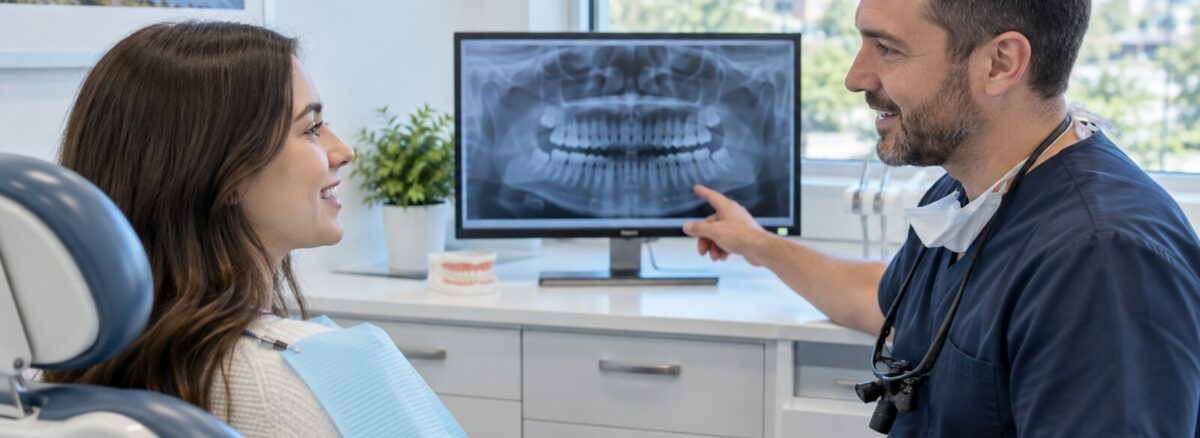
Your first visit for wisdom teeth removal in Kanata is focused on assessment and planning. The surgeon reviews symptoms, health history, medications, allergies, referral information, and imaging. You will discuss whether removal is recommended, the complexity of the teeth, anaesthesia options, expected recovery, risks, and fees.
Clinical Review and Imaging
The surgeon evaluates the position of the wisdom teeth, nearby teeth, bone, sinuses, and important nerves. Existing X-rays may be reviewed, and additional imaging may be requested when it would change planning. Not every wisdom tooth needs the same approach.
Medical History and Medications
Bring a complete medication and supplement list and disclose conditions such as asthma, diabetes, sleep apnea, heart disease, bleeding disorders, pregnancy, or previous anaesthesia problems. This information helps determine safe preparation and anaesthesia.
Discussing Anaesthesia
Options depend on health, age, anxiety, and surgical difficulty. If sedation is planned, fasting and transportation rules are important. Do not apply generic instructions without confirming the directions provided for your appointment. Anaesthesia information: https://argyleassociates.com/anaesthesia/.
Planning Recovery
Ask how much time to take away from work, school, sports, and travel; what to eat; how to manage swelling; and whom to call after hours. Kanata location: https://argyleassociates.com/locations/kanata/. Wisdom teeth information: https://argyleassociates.com/our-procedures/wisdom-tooth-removal/.
Look Beyond a Single Online Answer
Questions about wisdom-teeth removal in Kanata rarely have a universal yes-or-no answer. Research can help you understand terminology, but published averages and general advice do not account for the anatomy, medical history, medications, habits, goals, or restorative design of one patient. Use online information to prepare questions, then rely on examination and imaging for an individualized recommendation.
The Role of Imaging and Treatment Planning
Clinical examination shows gum condition, tooth stability, bite, swelling, and other visible findings. Imaging helps the surgeon evaluate roots, bone, sinuses, nerves, and the proposed surgical area. Together, these findings guide the choice of procedure, anaesthesia, timing, and follow-up. Additional tests or communication with another healthcare provider may be appropriate when health conditions or medications could affect healing.
Understand Benefits, Risks, and Alternatives
Ask the surgeon to explain the expected benefit, meaningful risks, and reasonable alternatives—including what may happen if no treatment is completed now. A responsible discussion should also cover uncertainty. Even carefully planned surgery can involve infection, bleeding, delayed healing, altered sensation, or a need for additional care. The relevance of each risk depends on the procedure and the individual patient.
Prepare for Recovery Before the Appointment
Planning ahead can make recovery less stressful. Arrange transportation when sedation is used, follow fasting and medication directions, prepare appropriate foods, and keep written postoperative instructions accessible. Confirm when you may return to work, school, exercise, driving, and travel. Ask which symptoms are expected and how to reach the clinic if recovery does not follow the anticipated pattern.
Long-Term Care Still Matters
Surgery is one stage of care. Long-term results also depend on oral hygiene, routine dental visits, control of health conditions, avoidance of tobacco, and attending recommended follow-ups. Report new pain, swelling, drainage, bleeding, mobility, or changes in the bite instead of waiting for a routine appointment. Good maintenance helps the clinical team identify small problems before they become more difficult to manage.
Before You Make a Final Decision
Take time to review the proposed treatment in writing and make sure the plan answers your main clinical and financial questions. Confirm what will happen at each appointment, whether another provider is involved, what could change after treatment begins, and how unexpected findings would be handled. Ask for clarification if a term, fee, risk, or instruction is unclear. Informed consent is an ongoing conversation, not simply a form signed on the day of surgery. A well-planned decision should reflect your health, goals, schedule, support at home, and ability to maintain the result over time.
Questions to Bring to Your Consultation
Ask what treatment is recommended, which alternatives are reasonable, how your medical history changes the plan, and what recovery is expected. Request written information about fees, insurance documentation, anaesthesia, preparation, follow-up, and warning signs. Individual assessment matters because online guidance cannot show the condition of your teeth, gums, bone, nerves, or sinuses.
Book an Appointment With Argyle Associates
Argyle Associates provides oral and maxillofacial surgery at locations in Barrhaven, Carling, Kanata, and Orleans. Visit https://argyleassociates.com/contact/ to arrange a consultation. Follow Argyle on Facebook at https://www.facebook.com/argyleassociates/ and Instagram at https://www.instagram.com/argyleassociates/.
This article is general education and does not replace personalized medical or dental advice. Contact your care team for instructions specific to you.